Maximise your conversions by harnessing the power of content syndication
Get Started


Major sporting moments change how people watch, shop and prepare, and the World Cup is one of the clearest examples. The 2026 FIFA World Cup is the biggest edition of the tournament to date, with 48 teams, 104 fixtures and three host countries. It is taking place across 16 host cities in Canada, Mexico and the United States.
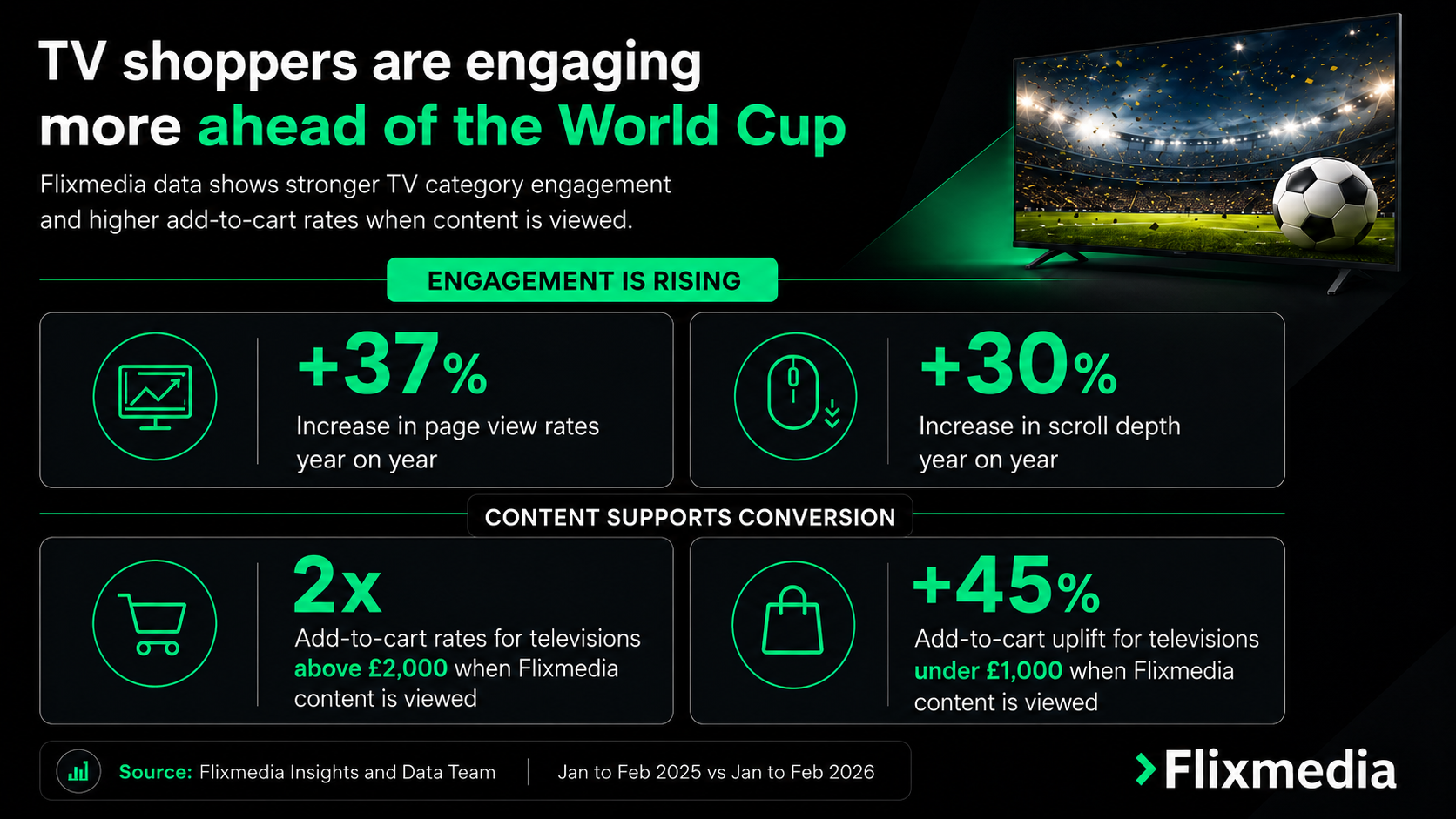
For five weeks, fans will be watching matches across screens, streaming platforms and connected devices. But the impact starts before kick-off and continues throughout the tournament, as shoppers prepare, upgrade and compare how they want to watch (learn more on how the 2026 FIFA World Cup will affect e-commerce here). For the TV category, that matters as Flixmedia data already shows a 37% year on year (YoY) increase in product content view rates and a 30% increase in scroll depth, suggesting shoppers are spending more time engaging with TV content as World Cup interest continues to influence the category. More recent Flixmedia data shows this intent is now translating into stronger category performance. Across March and April, add-to-cart rates for Flixmedia TV brands increased by 14% year on year, while units sold rose by 21%. This suggests shoppers are not only engaging with TV content in the lead up to the World Cup, they are actively moving closer to purchase.
The 2026 FIFA World Cup is a vital moment in e-commerce, as many shoppers begin to compare screen sizes, picture quality, sound features, smart TV functionality and price points. It can turn a casual browse into a serious purchase journey. But demand alone does not guarantee conversion. For TV brands, the question is whether their product detail pages (PDPs) are ready when shoppers move from interest to comparison.
Football fans do not only watch the tournament, they also prepare for it. For higher-ticket products like televisions, that preparation often involves multiple touchpoints before a shopper feels ready to buy. That is where the retailer PDP becomes critical.
The way fans watch is also changing. Streaming has become a major part of TV consumption. According to Nielsen, streaming usage has increased by 71% since 2021, reaching 44.8% of total TV usage in the US in 2025. That marked the first time streaming overtook broadcast and cable combined. This shift matters for the TV category because shoppers are not only thinking about screen size. They are also considering app access, connectivity, picture quality, refresh rate and sound experience.
Our Insights and Data Team analysed shopper behaviour from January to February 2025 compared with the same period in 2026 to understand how TV demand was building before the World Cup. The data shows a clear increase in category engagement. Product content view rates have risen by 37% year on year, while scroll depth has increased by 30%. This suggests shoppers are not only landing on TV product pages. They are engaging further with the content available to them. This matters because traffic shows interest, but content engagement gives a clearer signal of intent. When shoppers spend more time exploring product content, it suggests they are actively comparing features, looking for reassurance and seeking the information they need to make a confident purchase decision.
That intent becomes even clearer in the final lead-up to the tournament. Across March and April, Flixmedia TV brands saw add-to-cart rates increase by 14% year on year, while units sold rose by 21%. Shoppers are also making quicker decisions. In 2026, more cart clicks happened earlier in the product content journey, with 56% of cart clicks taking place between modules 2 and 8, compared with 51% in 2025. This shows that TV shoppers are arriving with stronger intent and need the right information sooner. For brands, the strongest content should not sit too far down the PDP. High-impact formats need to appear early enough to support the decision while shoppers are actively comparing.
The uplift is easier to see when the data is viewed together:
The TV category is feature heavy, and shoppers are often comparing specifications that are not always easy to understand at a glance. Screen size, resolution, refresh rate, sound technology, smart functionality, connectivity and display type can all influence the decision, but shoppers need more than technical detail. They need clear product content that explains what those features mean for picture quality, sound performance, streaming access and overall value.
This is especially important for premium models, where shoppers need to understand why one product costs more than another. A basic product listing is unlikely to do enough on its own. Industry research also shows that product pages remain a weak point for many retailers, with Baymard research finding that only 49% of e-commerce sites have a decent or good product page experience. For high consideration categories like TVs, richer product content helps shoppers understand the product, compare options and feel more confident in their decision.
The commercial impact is clear. When shoppers viewed Flixmedia content, add-to-cart uplift increased from 23% in 2025 to 30% in 2026, showing that product content is having a greater impact in a World Cup year than in a non-World Cup year. For televisions priced above £2,000, add-to-cart rates double when Flixmedia content is viewed, while products priced under £1,000 see a 45% uplift. This is significant because TV purchases, especially premium models, are rarely quick decisions. Shoppers need to understand the difference between models, features and price points before committing. The right product content helps close that gap by giving shoppers clearer answers at the point of decision, explaining value, supporting comparison and reducing uncertainty.
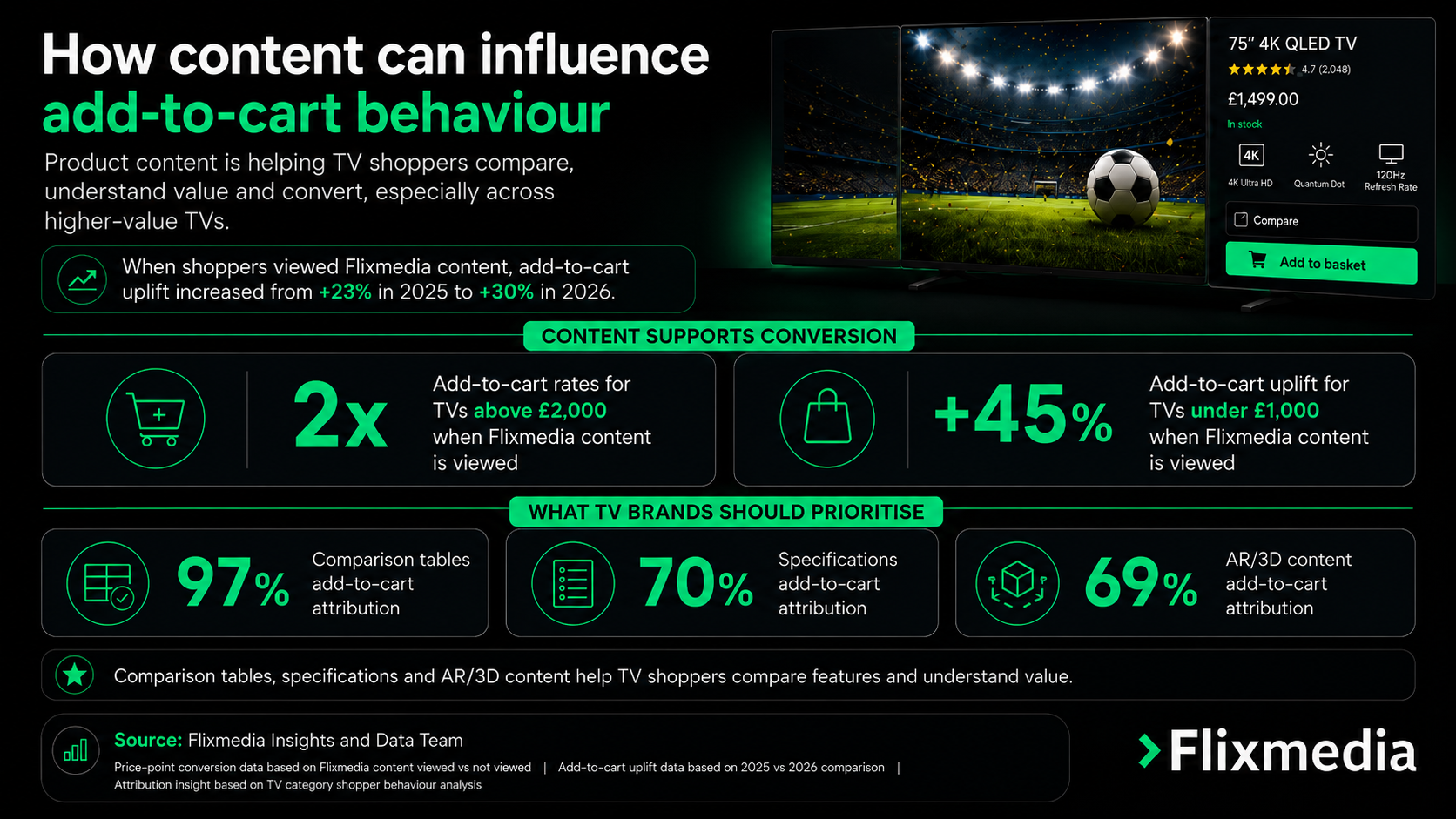
The 2026 FIFA World Cup creates a window of attention, but that attention needs to turn into action. For TV brands, this means making retailer PDPs work harder while demand is active. Strong product content should help shoppers understand the product quickly, compare models easily and feel confident about the value of the purchase. Comparison tables can show the difference between models, while product videos can bring picture quality, design and scale to life. Feature-led content can explain why display technology, refresh rate, sound quality and smart functionality matter, while lifestyle imagery helps shoppers imagine the product in their home. The goal is not to add content for the sake of it. The goal is to make the buying decision easier. Flixmedia data also shows that comparison tables have the highest add-to-cart attribution at 97%, followed by specifications at 70% and AR/3D content at 69%, making these formats especially important for TV shoppers comparing features and price points
The World Cup creates a clear opportunity for the TV category. Shoppers are upgrading, comparing and buying around how they want to watch, and many will be comparing TVs across retailer sites during the tournament. But traffic alone will not convert. Flixmedia data shows that TV shoppers are engaging further with product content, with view rates up 37% year on year and scroll depth up 30%. The impact on add-to-cart behaviour is also clear, with add-to-cart rates doubling for TVs priced above £2,000 when Flixmedia content is viewed, and a 45% uplift for products under £1,000.
For brands, the message is simple. When shoppers are comparing screen sizes, features, specifications and price points, the right product content gives them the clarity and confidence to buy. Get in touch to see how your PDP content can help shoppers compare, understand and buy with confidence.


.png)